I just recently traveled back to Taiwan and the weather here is getting slightly intolerable. I can sweat within minutes just by standing anywhere without AC, even under the shade. It's that serious.
Food choice-wise, hot pot and fried food probably won't be on my top list at this moment. How about a cold dish that comes with some protein, couple different vegetables, and lots of tasty Asian seasonings? That should help the appetite in this scorching weather!
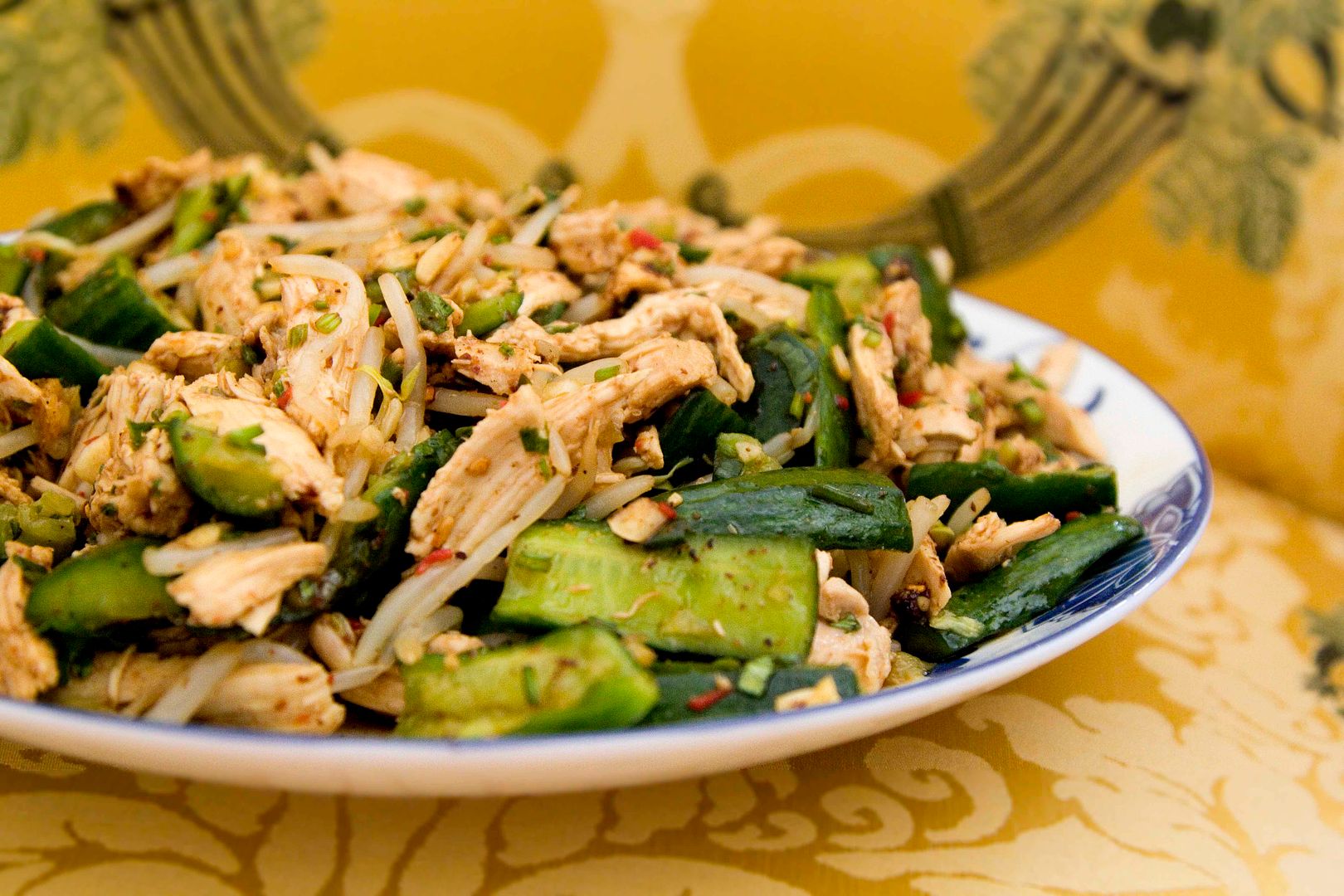
Chinese cold dish using chicken, cucumber, bean sprouts, and lots of appetizing seasonings -
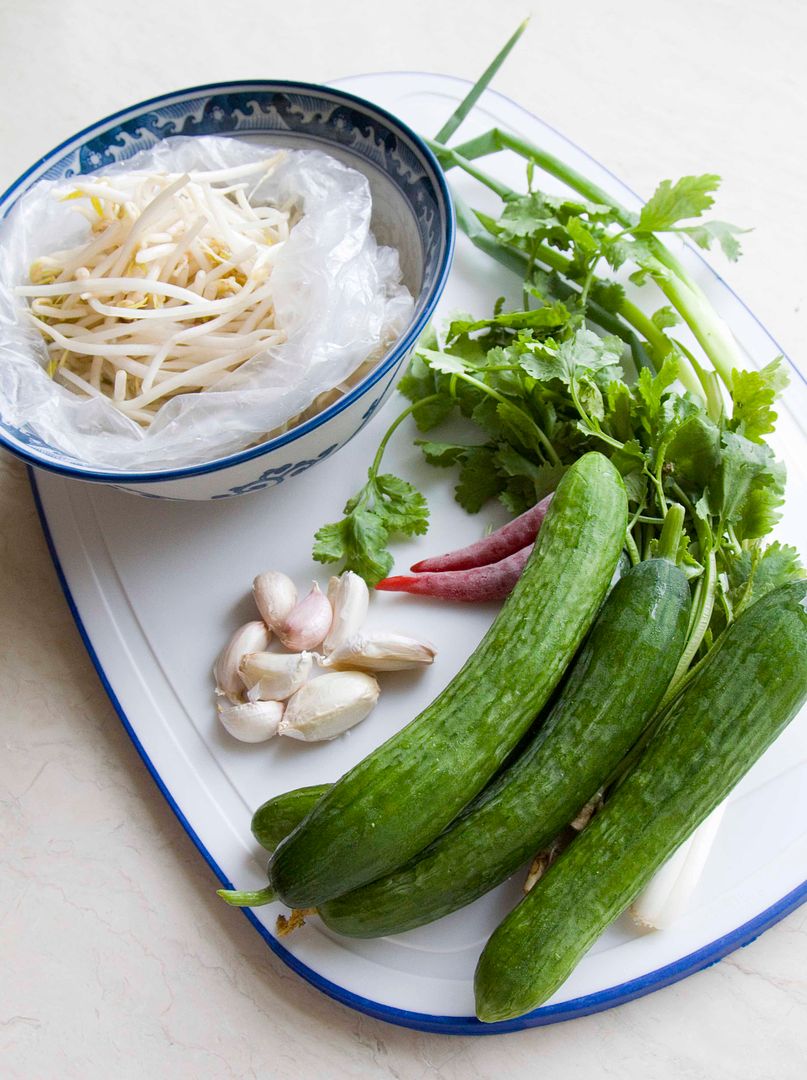
Ingredients?
- 1 lb of chicken (dark or white meat based on personal preference, I used half and half)
- 4 small/medium cucumbers (skinny type)
- 1 small bundle of bean sprouts
- 10 garlic cloves
- 2 stalks of scallion
- 3 red chilies
- 1 small bundle of cilantro
- 4 tablespoons of black vinegar
- 3 tablespoons of soy sauce
- 1 tablespoon of sesame oil
- 3 teaspoons of homemade chili sauce (include some chili oil)
- 2 teaspoons of granulated sugar
- Some sea salt
How?
Use boneless and skinless chicken as a whole. Put the chicken into a pot and fill in the water till all the chicken is covered by the liquid. Turn to low heat to slowly cook the chicken. You can test the doneness by sticking a chopstick into the thickest part of the chicken. If the chopstick comes out easy and clean then the meat should be ready to use.
If the pot starts to boil eventually, leave the fire on for another 3 to 5 minutes then the chicken should be fully cooked through too. Remove the pot from the heat and let it cool off for about five minutes. Remove the chicken from the liquid and thread into smaller strips by hands.
Remove any dry string-like stems from the bean sprouts. Bring another pot of water to a boil and add in the bean sprouts. Cook for about 10 seconds, drain well and shock the sprouts with icy cold water. Make sure to use previously boiled water to prevent bacterial contamination. Once cool down, drain well and set aside for later use. You can also cover with foil and transfer to the fridge while waiting for the "final assembling."
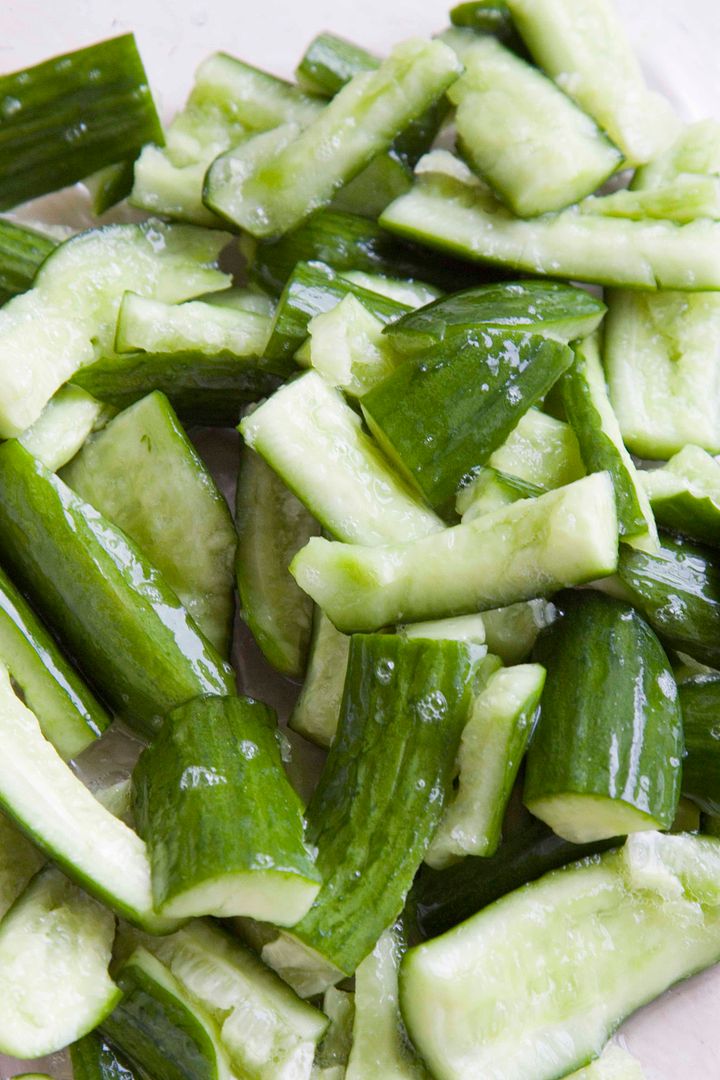
Thoroughly rinse the cucumber and chop off stems. Use the side of the knife to smash the cucumber. You can also cover the cucumbers with clear foil and smash them with a rolling pan. We want unevenly smashed surface so that the seasonings can better cling onto the cucumbers.
Transfer the smashed cucumber strips to a container and sprinkle about 3 teaspoons of sea salt. Mix well with one hand and let it sit for about 3 minutes. The salt will help drawing out the liquid and the grassy taste from raw cucumbers.
Discard this liquid and rinse the cucumber with cold water (previously boiled also). Once done, pat dry and set aside for later use. You can also cover the cucumbers with clear foil and transfer to the fridge first.
Peel and finely chop the garlic cloves. Discard the bottom stems from the scallion and chop the remaining section. Discard the stems from the chilies and finely chop the remaining part. Finely chop the cilantro.
Take a big bowl and add in the following ingredients: chopped garlic, chopped scallion, chopped cilantro, and chopped chilies.
Mix in the following seasonings: black vinegar, soy sauce, chili sauce, granulated sugar, and sesame oil. Mix well.
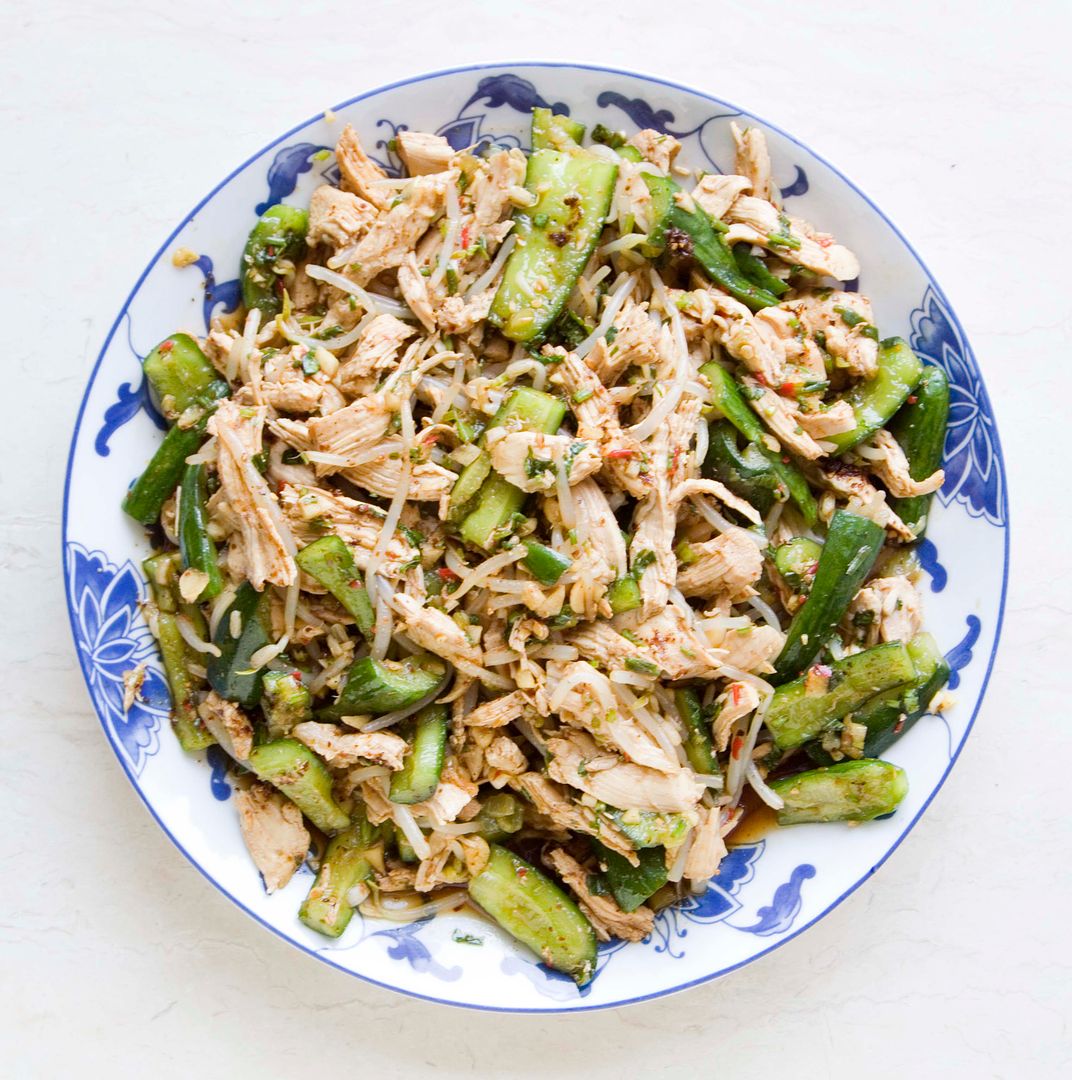
Mix all the ingredients on a big plate. Give it a quick taste and see if more seasonings are needed. The key here is not to be afraid of over-seasoning. It's actually pretty hard to over-season this dish. In fact, if this cold plate is not sour or spicy enough, the overall flavors will appear flat.
I love to eat it as a side dish with some dry noodles. However, when I'm not in the mood to heat up the food, this dish actually works with cold rice too.
Hope this recipe helps you temporarily forget about the summer heat.
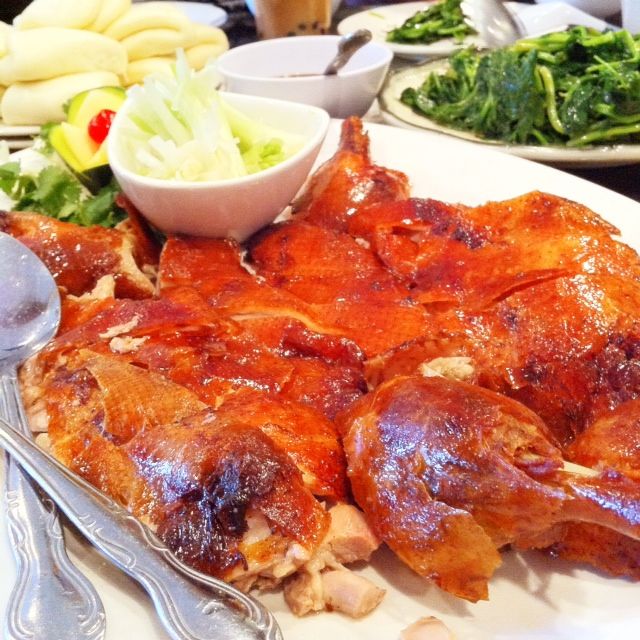
Ever had Peking duck at a Chinese restaurant?
This famous Chinese dish requires various steps in the cooking process. Baste with duck juice, roast in wood fire oven, soak in restaurant's secret stock, and coat with sugar based sauce are just part of the work in order to create a juicy duck with fatty yet crunchy skin on the table.
Some restaurants offer two to four different ways to devour the duck. First and the most delicious in my opinion, simply wrap the duck skin with steamed buns, add a spoonful of sweet fermented flour paste and scallion, and enjoy all the flavors in one bite. One common way to enjoy the remaining of the duck is heavy seasoned stir fry using the meat. As for the bones, many restaurants use it as stock base for congee, and I'm gonna do the same for my leftover Peking duck!
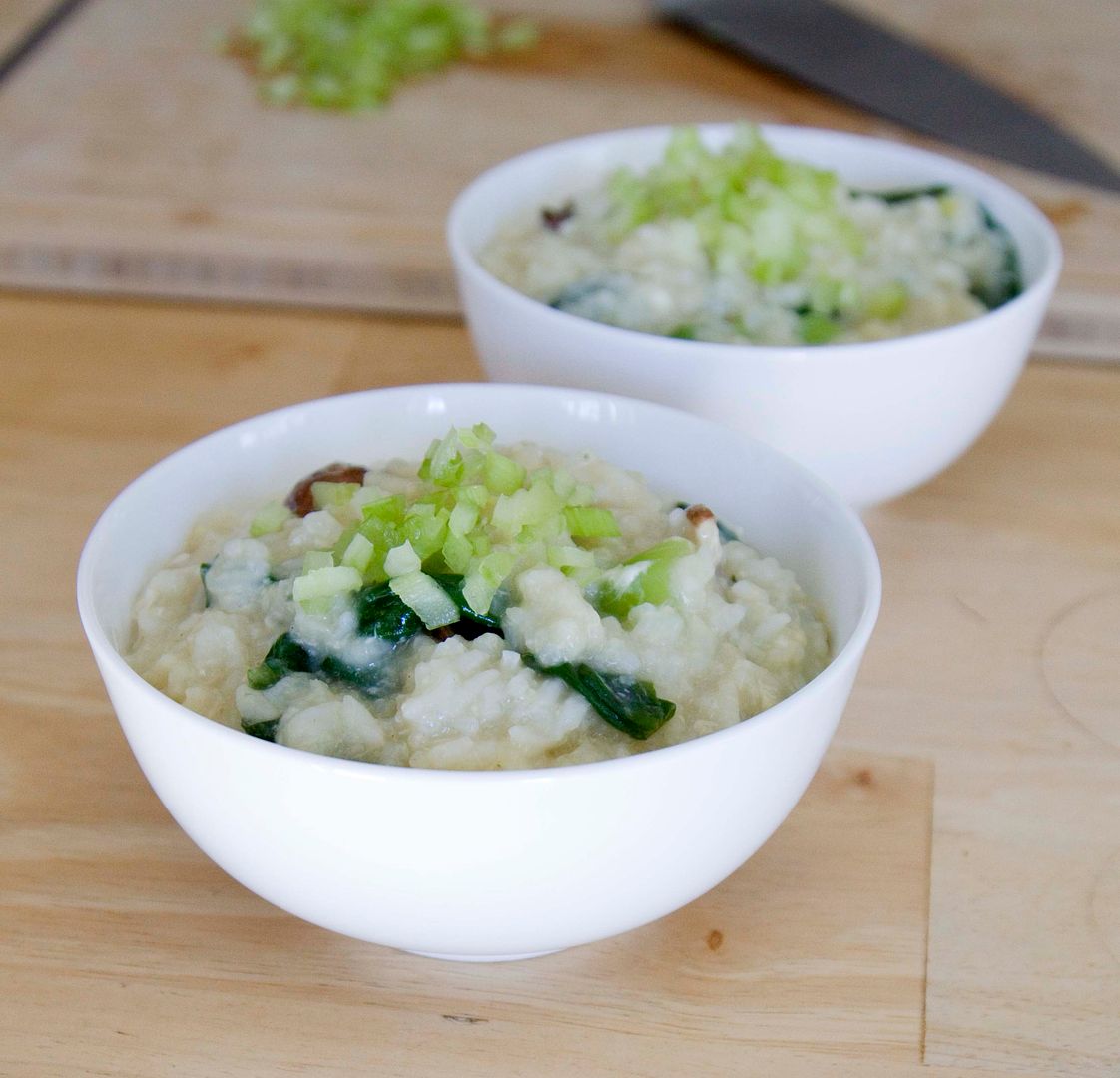
Congee with the very last bits of yumminess from Peking duck bones -
Ingredients (for 4 to 5 people)?
Leftover Peking duck bones (discard the neck bones)
2 slices of ginger
4 cups of chicken stock
4 cups of water
2 1/2 cups of cooked white rice
1 cup of bak choy
1 cup of mixed salad greens or whatever vegetables left in the fridge
6 cremini mushroom
2 to 3 eggs
Some finely chopped celery
Some white pepper powder
Some sea salt
How?
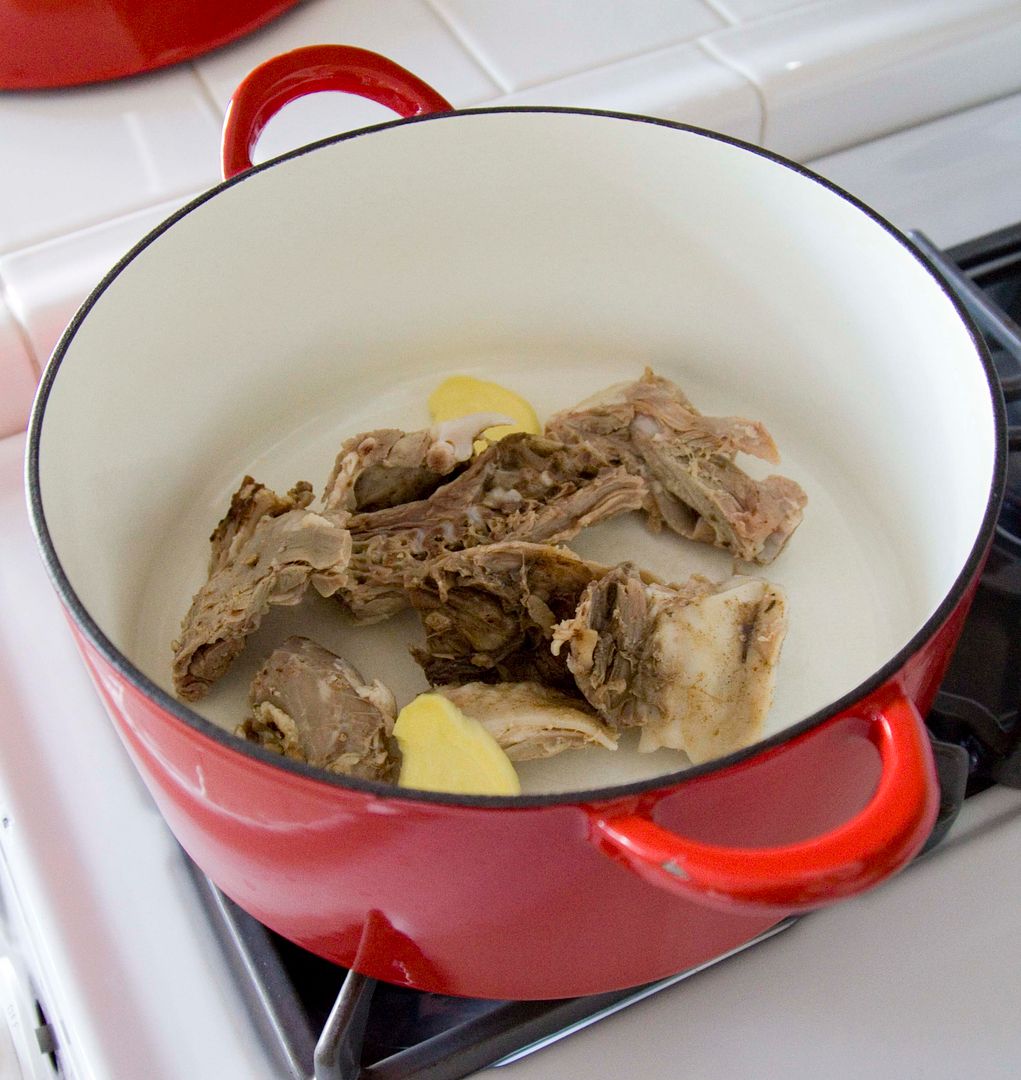
Let's make the stock first. Put the leftover bones along with 2 slices of ginger inside a big pot.
Add about 4 cups of chicken stock and 4 cups of water. Bring to a boil then lower the heat to keep it simmer. Remember to skim off any dirty floating bits during the process.
Cook for about 30 minutes, or till the stock has been reduced by at least 1/3, 1/2 the most. Once ready, drain the soup to another pot and discard the bones and ginger slices. Set the soup aside for later use.
I added some chicken stock because there weren't enough leftover bones from just one duck. You can use water only if there are more bones to make the stock. Either way, I do think using some chicken stock adds more flavor to this soup base.
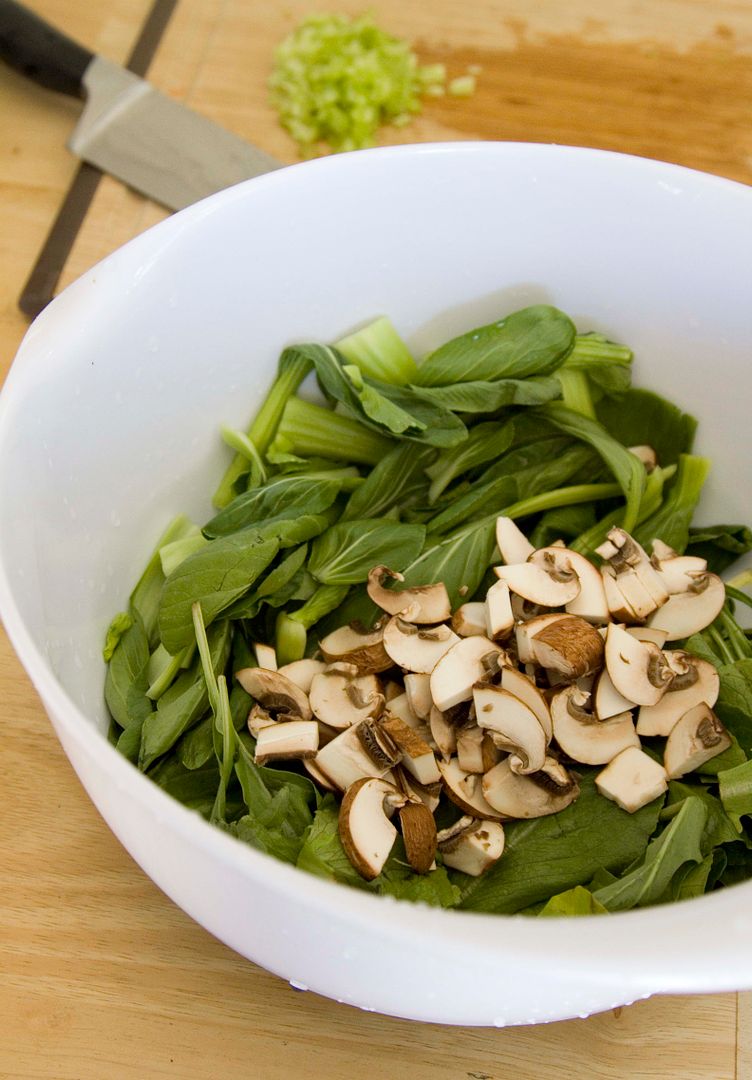
Discard the mushroom stems and chop into small cubes. Chop and discard the bak choy stems, about 1/2 inch in length. Thoroughly rinse the veggies and drain well. There were some leftover mixed salad greens in the fridge so I used that in this recipe too. You can always substitute with other types of leafy greens of your liking.
Preparing celery might be tricky. Break the end of the celery and peel it from the bottom till the top from the outer layer. The tough strings should attach to the very bottom section, so when you try to pull through the celery, the tough strings can be removed at the same time. (I promised I'll take a picture of this step to better show you what I'm talking about next time.) Chop the celery into tiny cubes.
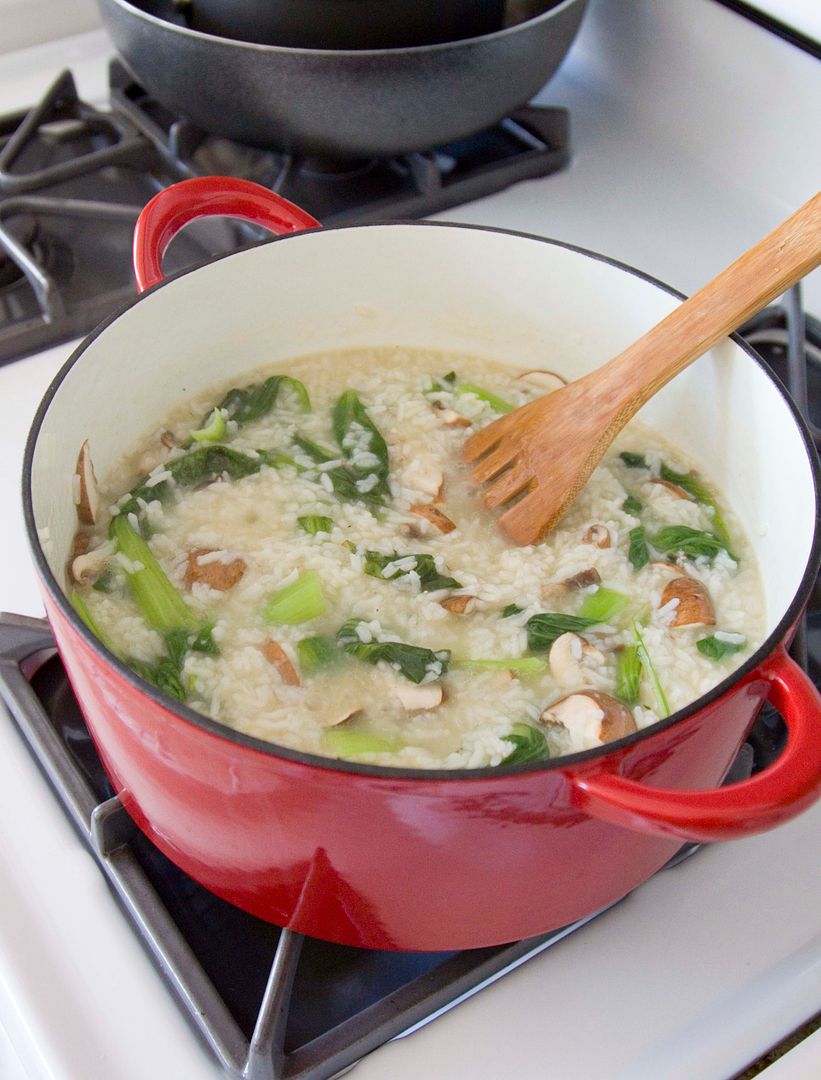
Add the cooked rice into the pot and pour in about half of the stock. Turn to medium heat to slowly bring the pot to a boil. As for the other half of the stock, turn to medium high heat and toss in prepared veggies to cook away the raw tastes. Bring to a boil then turn off the heat.
Keep an eye on the rice, add all the remaining stock along with cooked veggies when the rice needs more liquid. Stir the mixture once a while to prevent the bottom from burning.
Season the congee with some sea salt and white pepper powder. The amount used depends on the flavor of the stock and the tastes from the duck bones. Just add a little bit at a time to make sure the flavors are right. You can also use just a few dashes of Japanese ponzu sauce if desired. Beat 2 to 3 eggs first then add into the pot. Give it a gentle stir then turn off the heat.
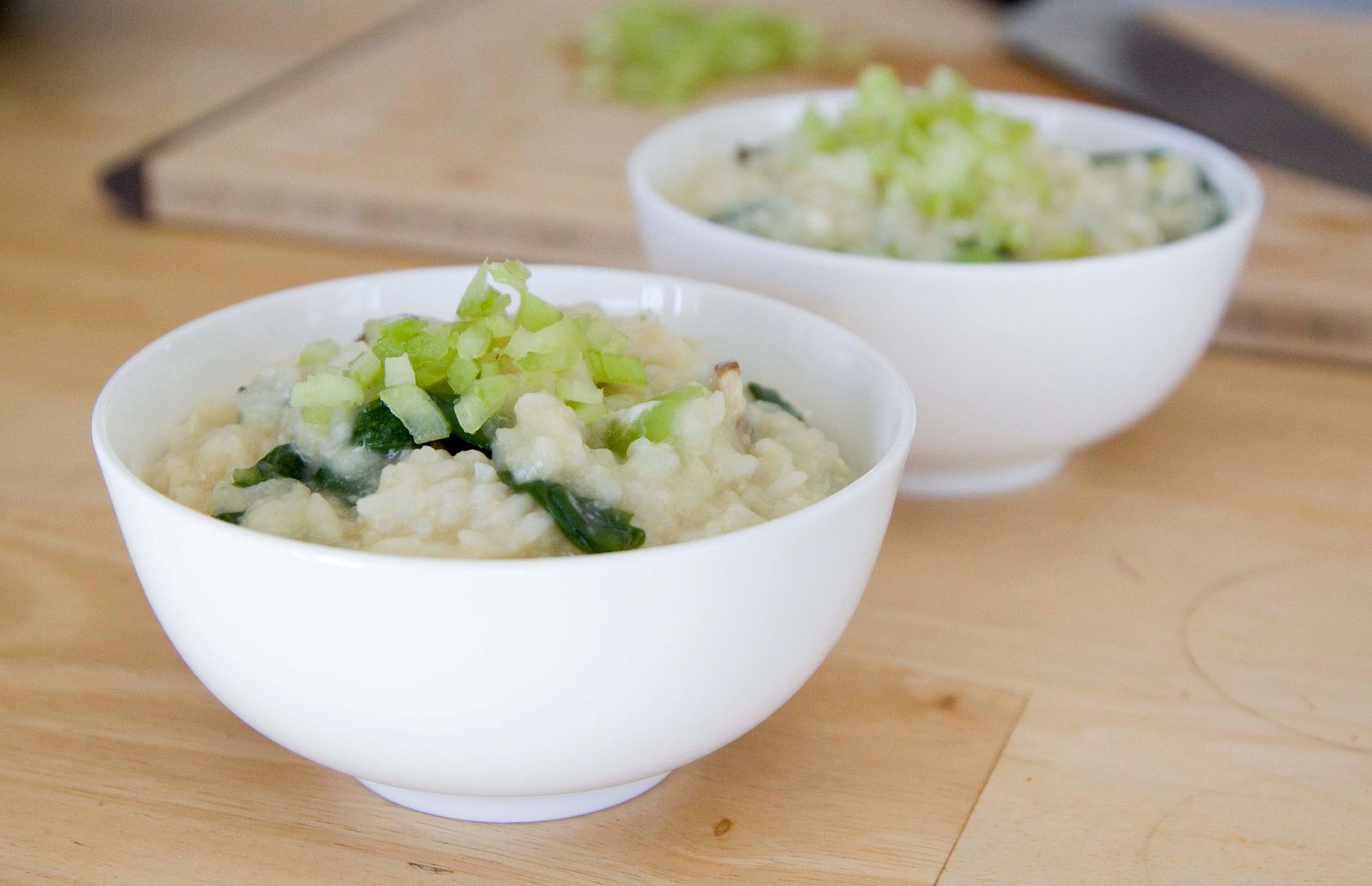
Serve the congee with some chopped celery to brighten up the flavor. The chopped celery here works just like chopped parsley added in the end of some Italian dishes.
Leftover makeover, even the bones can be fully utilized!