May 5, 2014

Assorted Sashimi Goodness in One Wooden Bowl - Sushi Koto in Fountain Valley, CA

One of the benefits living in California (for a foodie) is cultural diversity and a wide variety of food that comes along with it. Popular cuisines such as Chinese, Japanese, and Italian are literally everywhere. Even some rare finds like Ethiopian and Burmese restaurants can be spotted. 

More restaurants mean tougher competition. Eateries have to strive for success on flavor, service, price, location, and more. In a way, the customers get the best of it. Taking Japanese sushi for instance, the Sushi Koto in Fountain Valley, CA has worked its way and became the to go place in Orange County for reasonably priced sashimi bowls, aka chirashi in Japanese. 


Prices for a lunch entrée range between $10.5 to $23. Don't be shocked by the $23 price tag. You actually get a good amount of fresh sashimi along with salad, miso soup, and even dessert with the set. Trust me, I tried to make my own chirashi the other day and it can costs quite a lot of money not even mentioning the prep and cleaning works before and after.


Lunch opens daily at 11:30 a.m., try to be there before noon especially during weekends, the seats get filled quickly. 


Lunch menu (click on the image to enlarge the view) -


Some other lunch combinations -


Chirashi variations -


Drink menu -


Koto offers three Japanese beer brands including Asahi, Sapporo, and Kirin -


Generous portion for the salad, especially when compared with the tiny dish you usually get from lunch combos -


Sesame based dressing, not too sticky yet not too diluted. Taste-wise not overly sweetened with granulated sugar. 

Miso soup -


Chef's choice omakase kaisen don $23 -


Am I the only person who wants to bring that wooden box home?

Literally sashimi overflowed and I still couldn't see the rice below after digging with my chopsticks. The restaurant also provides a small/medium size plate so that customers can move some sashimi over. It'll also be easier to find the rice in the sea of fish and crustaceans.
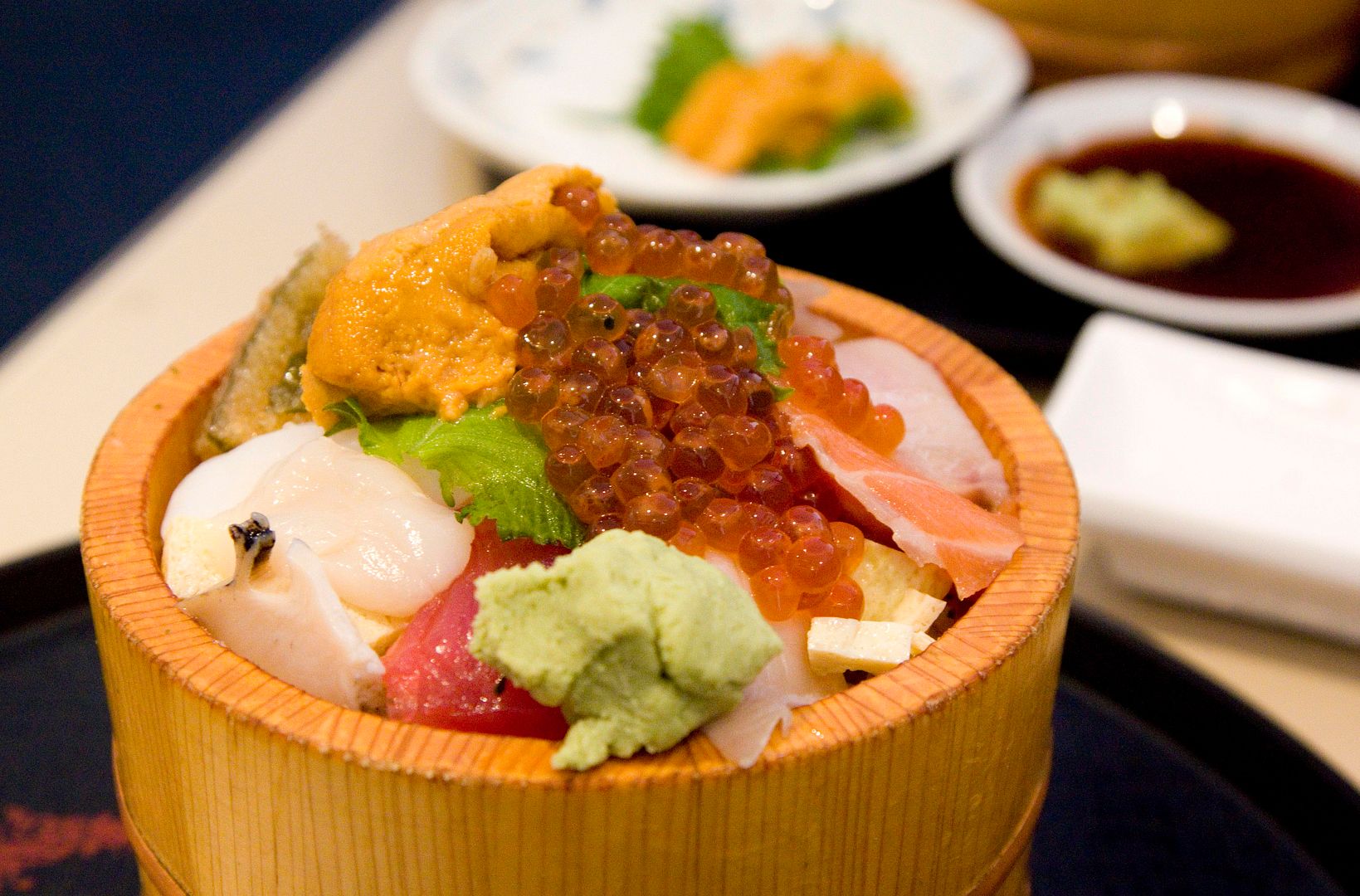


You can dip the seafood with soy sauce and a little bit of wasabi, or mix both on the side then pour over the sashimi to enjoy the meal. It's completely up to you and I've seen Japanese eating chirashi in both ways.

Komochi Konbu -


Herring roe on kelp, crunchier and chewier compared to regular salmon roe/ikura. Some people like the feeling when biting into the roes but I'm never a big fan of it. However, it does provide a different kind of texture to the seafood bowl.

Dessert and hot tea - 


Warabi mochi, fresh berries, sweet red beans, and cream. The dessert was beyond my expectation. At first I thought the dessert will be something like a small scoop of ice cream or pudding instead of this mixture of semi restaurant made sweet items. 

Final bill for two omakase kaisen don -


Sushi Koto can certainly be considered the place to go for bargained chirashi. The freshness is guaranteed especially with the number of customers it receives daily. The sashimi grade might not be the best but definitely well worth the one $20 bill paid for. Service is nice as always for a Japanese establishment. 

If you ever crave for sashimi but don't feel like making a dent in your wallet, or reluctantly to settle for compromised seafood grade at the same time, Sushi Koto's serves all the above purposes with its chirashi selection. Just make sure to get there before lunch and dinner rush hours.


Cindy's Rating: 6 


Sushi Koto (古都)
18225 Brookhurst Street. Suite 7
Fountain Valley, CA 92708
http://www.kotooc.com/

Operating hours:
Lunch daily from 11:30 a.m. ~ 2:15 p.m.
Dinner Monday to Thursday from 5:30 p.m. ~ 10:00 p.m.
Dinner Friday and Saturday from 5:30 p.m. ~ 10:30 p.m.
Dinner Sunday from 5:30 p.m. ~ 9:30 p.m.

Don't feel like dining out? How about homemade chirashi:
Festive Japanese Food at Home - Colorful Chirashi as Easy as 1 2 3!

Apr 29, 2014

Semi Stir Fried and Simmered Choi Sum - 煨炒菜心

Quick stir fry recipe using "choi sum," or vegetable heart 菜心. This ingredient can be found at Chinese grocery stores. Among all the leafy greens, this is the only one that looks like thick sticks. Should be pretty easy to spot choi sum even when finding yourself surrounded by all the unfamiliar Chinese produce. 

Semi stir fried and simmered choi sum 煨炒菜心 -


Ingredients?

  • 1 large choi sum
  • 1/2 cup of low sodium chicken stock
  • 3 garlic cloves
  • 2 red chilies
  • 0.3 lb/one handful of pork strips
  • Some olive oil (yummier choices are pig fat and chicken fat)
  • Some salt

How?

Here's a picture of the choi sum, there's no way you can miss this thing at the produce section -


Choi sum comes with fibrous outer surface, kind of like celery. Try to make a slit in order to peel the exterior skin from the opening. However, simply peeling off the surface is not enough. Use a peeler to further remove any residual fibers until the choi sum appears moist and smooth.


Cut the prepared choi sum diagonally into almost half an inch thickness pieces. Peel and trim off the tough end from the garlic cloves, then slice the cloves. Trim off the stems from the chilies and finely chop the remaining. 


The pork strips I used were actually from a large chunk of meat used in soup. So I took the pork out and cut them into strips. You can definitely use uncooked version but try to avoid the pre-cut ones from the grocery stores since they are mostly too lean for this recipe . Use semi-fatty pork for a more moist and tender texture. 


The homemade chicken stock used in the picture was still in cold gelatinous form. It contains natural chicken fat derived from hours of simmering, which looks like soft jelly when stored in the fridge. This type of stock is perfect for this choi sum recipe, in which more fatty content creates a smoother bite for the vegetable. 

Drizzle some oil in the pan till it thinly coated the entire bottom. Turn to medium heat, add in sliced garlic and the chilies. Cook for couple minutes, till the garlicky aroma comes out but not burned.

Add in the choi sum along with a small pinch of salt. Give it a quick stir, about one minute. Add in pork strips and just cook till about half way through.

Pour in low sodium stock and turn to medium high heat. Keep the stock simmering or slightly boiling. Cook till the stock appears nearly gone and when the ingredients have a slightly sticky or gooey appearance. 


It might take up to few minutes for the sauce to get condenses and soaked in the veggies. The choi sum still has a bite to it even after simmering. The texture is similar to ripe melon, but the bottom part adjacent to the skin. 

The garlic and chilies create extra kick for the choi sum, but the chicken stock is the true flavor determining the success of this recipe. Chinese style chicken stock works the best, the one made with scallion, chicken bones, ginger, etc. Or if you ever have any leftover chicken soup from a Chinese restaurant, why not bring it home and give this recipe a shot?